
What Are Cloud Computing Services?
Sections: Cloud Computing Overview, Modern Cloud Computing, Why Cloud Matters, Cloud Evolution, Cloud ERP for Distribution, Why Choose Ximple Cloud ERP, Cloud ERP Benefits, Cloud for Every Business, Cloud Computing Examples, Future of Cloud Computing, Conclusion
By Ximple Team
•
•
3–4 min read
•
Cloud Computing Services
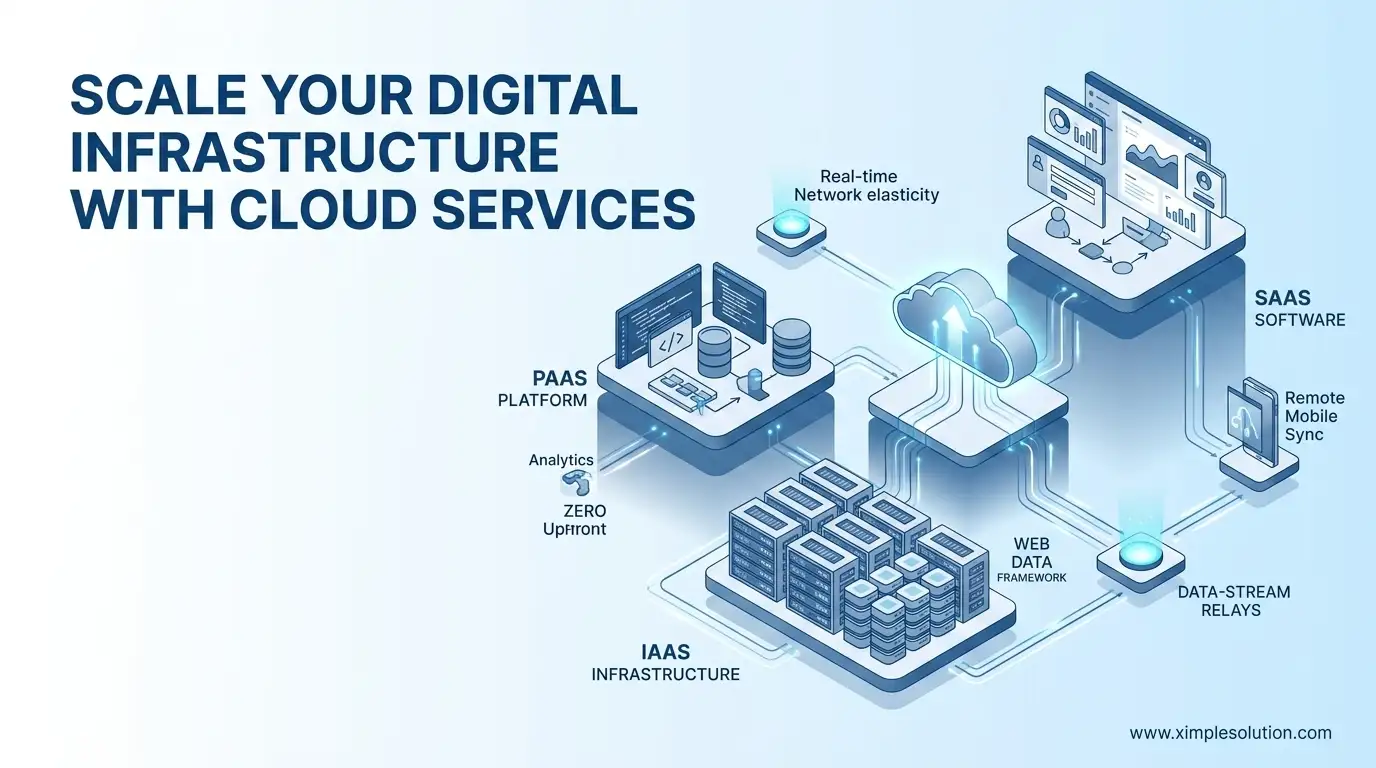
Cloud Computing at a Glance for Modern Businesses
Cloud computing services have evolved from early mainframe computing systems of the 1950s into the backbone of today’s digital enterprise world. What once began as centralized computing through basic terminals has now transformed into a highly scalable, secure, and on-demand service model powered by global data centers.
With the rise of virtualization in the 1990s and rapid internet expansion, cloud computing became a core enabler of digital transformation for businesses of all sizes.
Today, cloud computing is not just technology—it is a business growth engine for ERP-driven organizations, especially in distribution, wholesale, manufacturing, and B2B industries.
What Is Modern Cloud Computing?
Modern cloud computing refers to the delivery of computing resources such as:
- Servers and storage
- Databases and networking
- Applications and ERP systems
- Analytics and business intelligence
All delivered over the internet on a pay-as-you-use model.
Instead of maintaining expensive on-premise infrastructure, businesses access scalable cloud systems that are continuously updated, monitored, and secured by cloud providers.
Why Cloud Computing Is Essential Today
Cloud adoption is accelerating rapidly across enterprises because:
- Most enterprise workloads now run on cloud platforms
- IT budgets are increasingly shifting toward cloud services
- Organizations use centralized cloud teams or CoEs (Centers of Excellence)
- Data generation exceeds 2.5 quintillion bytes per day, requiring scalable infrastructure
For ERP-driven businesses, this shift is critical because operational data—orders, inventory, finance, and supply chain—must be processed in real time.
Why Cloud Technology Continuously Evolves
Cloud computing is not static—it evolves every day due to:
Massive Data Growth
Businesses generate huge volumes of transactional and operational data requiring high-performance cloud infrastructure.
Security Challenges
Cyber threats force cloud systems to constantly upgrade encryption, authentication, and access control systems.
Business Continuity Needs
Data backup, disaster recovery, and multi-region redundancy are essential for uninterrupted operations.
Performance Demands
Modern ERP and B2B systems require fast, real-time processing across multiple locations and users.
Cloud Computing in ERP & Distribution Businesses (Ximple Use Case)
For distribution and wholesale businesses, cloud computing becomes the foundation of digital operations.
Cloud ERP for Real-Time Business Control
Cloud ERP enables:
- Centralized order management
- Automated billing and invoicing
- Real-time stock updates
- Faster order-to-delivery cycles
Multi-Warehouse Inventory Management
Businesses can:
- Track stock across multiple locations
- Avoid overstocking or stockouts
- Get real-time inventory visibility
Supplier & Purchase Automation
Cloud systems help:
- Automate purchase orders
- Improve vendor coordination
- Speed up procurement cycles
B2B CRM & Dealer Management
Cloud CRM supports:
- Dealer-wise pricing control
- Purchase history tracking
- Stronger customer relationships
Field Sales Mobility
Sales teams can:
- Create orders on mobile devices
- Access live inventory data
- Generate quotations instantly
Business Intelligence & Reporting
Cloud ERP provides:
- Sales dashboards
- Profit analysis
- Demand forecasting
- Region-wise performance insights
Why Businesses Choose Ximple Cloud ERP Solutions
At Ximple Solutions, cloud ERP is designed specifically for distribution, wholesale, and B2B ecosystems.
Key Advantages:
- Scalable cloud-based architecture
- Secure multi-layer data protection
- Industry-focused ERP modules
- Fast implementation and onboarding
- Dedicated customer support lifecycle
Our solutions support both:
- On-premise to cloud transition
- Cloud-connected ERP deployment models
Benefits of Cloud-Based ERP Systems
Cloud computing delivers clear business advantages:
Lower Operational Costs
No heavy infrastructure investment required.
Scalability on Demand
Easily expand or reduce resources based on business growth.
Anytime, Anywhere Access
Business operations are no longer location-dependent.
High Security & Backup
Data protection, encryption, and disaster recovery included.
Faster Business Execution
Reduce delays in procurement, order processing, and reporting.
Is Cloud Computing Only for Large Enterprises?
No. Cloud computing is equally powerful for:
- Small businesses
- Growing distributors
- Mid-size wholesalers
- Large enterprises
It enables smaller companies to compete at a global level with minimal IT investment.
Types of Cloud Computing Services
IaaS (Infrastructure as a Service)
Provides virtual infrastructure such as servers and storage managed by a provider.
PaaS (Platform as a Service)
Provides development platforms for building and deploying applications.
SaaS (Software as a Service)
Delivers ready-to-use applications like ERP systems over the internet.
Real-World Cloud Computing Examples
- ERP systems for business management
- Google Drive for file storage
- WhatsApp for communication
- E-learning platforms for education
- Government digital services
- Healthcare data sharing systems
Future of Cloud Computing (Next 3 Years)
Cloud computing will continue evolving with:
- Stronger cybersecurity frameworks
- Increased hybrid and multi-cloud adoption
- AI-powered automation in ERP systems
- Greater cloud governance and compliance tools
- Wider adoption among SMEs and B2B companies
Conclusion
Cloud computing is no longer just an IT upgrade—it is a strategic business transformation tool.
For distribution and wholesale businesses, cloud ERP systems like those offered by Ximple Solutions enable:
- Faster operations
- Better inventory control
- Smarter decision-making
- Scalable business growth
In a competitive B2B market, cloud computing is the foundation of operational efficiency and digital success.
FAQ
Cloud ERP helps distributors and wholesalers manage inventory, orders, warehouses, purchasing, and customer relationships from a centralized platform. It improves operational efficiency, reduces IT costs, provides real-time business insights, and supports business growth without investing in expensive infrastructure.
Yes. Modern Cloud ERP solutions use advanced security features such as data encryption, regular backups, role-based access, disaster recovery, and secure data centers to protect sensitive business information and ensure high system availability.
Choose a Cloud ERP that matches your industry requirements, supports scalability, offers real-time reporting, integrates with your business processes, and provides reliable implementation and customer support. For distribution and wholesale businesses, industry-specific ERP software delivers better efficiency and faster ROI.
Ready to Move Your Business to the Cloud?
See how Ximple Cloud ERP can help you automate operations, reduce costs, and grow faster.